Visual Reference
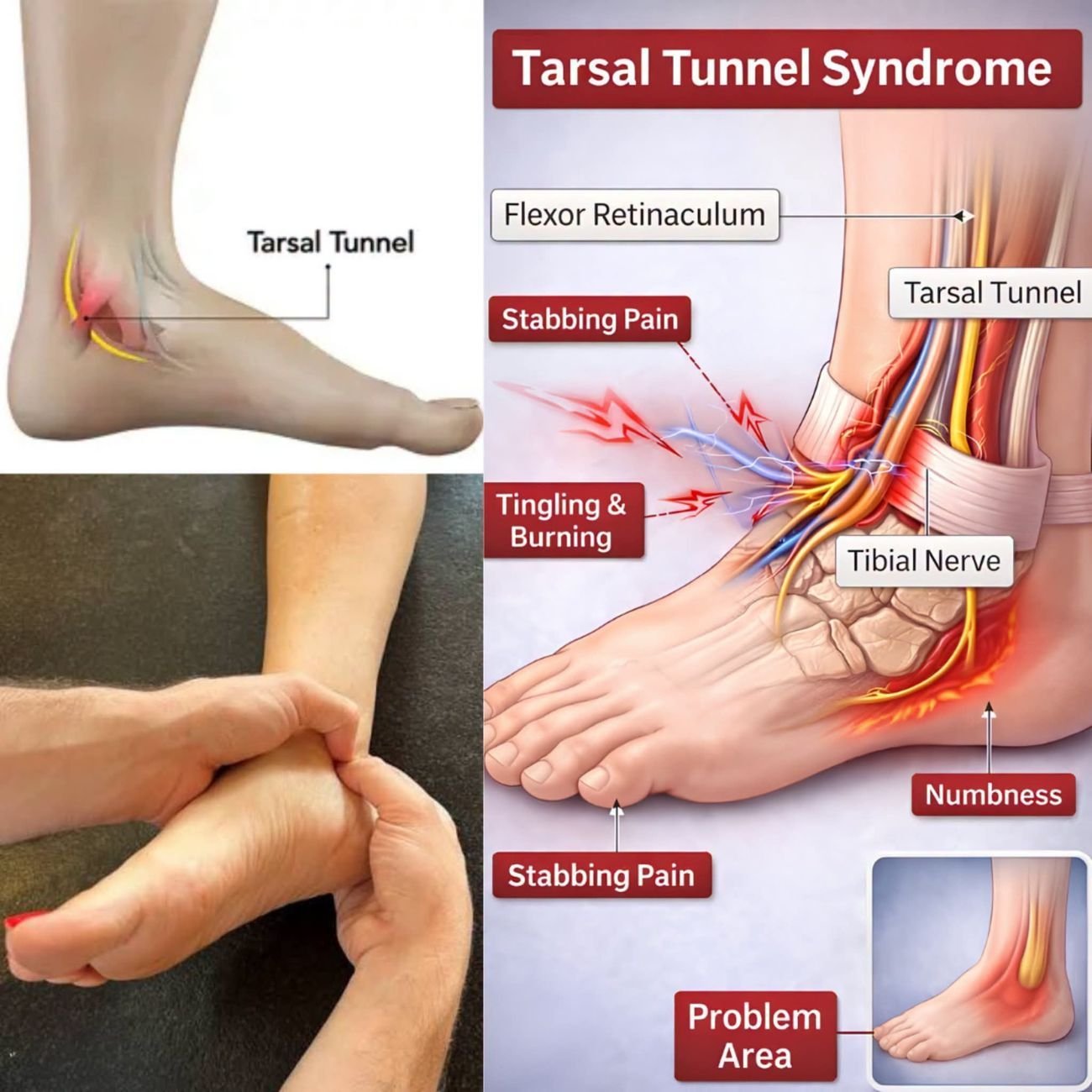
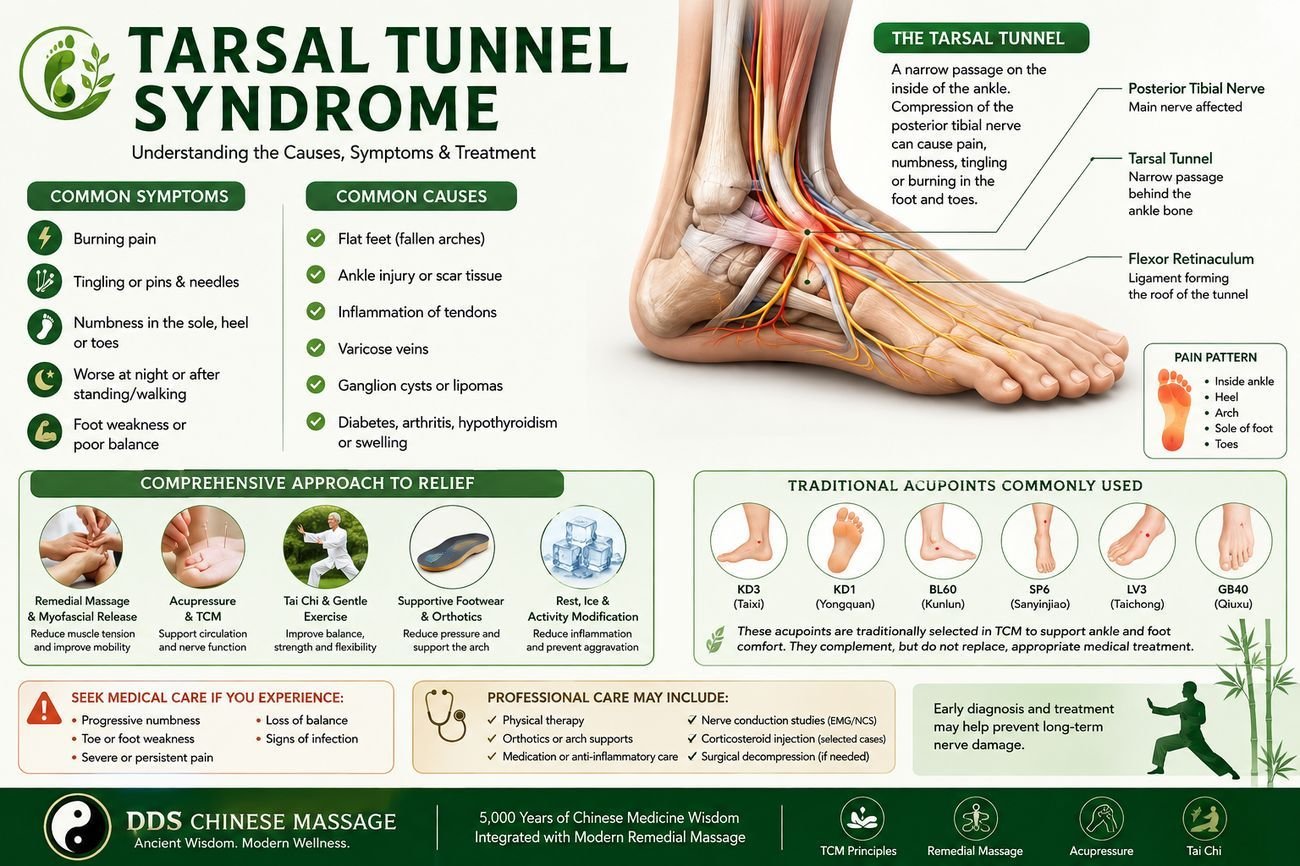
Understanding the tarsal tunnel
Conditions › Lower Limb › Tarsal Tunnel Syndrome
Lower LimbBurning, tingling or numbness that runs from the inside of your ankle into your sole and toes — often mistaken for plantar fasciitis, but a genuinely different condition.
Tarsal tunnel syndrome occurs when the posterior tibial nerve, which passes through a narrow tunnel of ligament and bone on the inside of the ankle, becomes compressed. This is essentially the foot's equivalent of carpal tunnel syndrome in the wrist, and typically causes burning, tingling or numbness affecting the inside of the ankle, the sole, and sometimes the toes.
This nerve travels through the tarsal tunnel at the inner ankle and is the structure directly affected in this condition.
A narrow passageway of bone and ligament; any swelling or thickening of surrounding tissue can reduce the space available for the nerve.
Flat feet or excessive foot rolling can increase tension and compression through the tunnel.
Nerves need to glide smoothly through surrounding tissue; restriction in this glide is part of the symptom picture.
Because the nerve branches after the tunnel, symptoms can appear in the sole, heel or toes depending on which branch is affected.
Without addressing the underlying compression, symptoms can persist or gradually worsen over time.
The inner ankle is the origin point of the Kidney meridian in Traditional Chinese Medicine, with the Spleen meridian also passing through this region. Persistent burning or numbness here is traditionally understood as stagnation along these pathways, sometimes alongside deeper energy depletion.
DDS Bioelectrical Therapy is often a helpful complement for circulation and recovery in the feet — however, please tell us before your session if you have a pacemaker or any implanted electronic device, metal implants near the treatment area, are pregnant, or have epilepsy, as this therapy is not suitable in these cases.
Plantar fasciitis typically causes sharp pain concentrated at the heel, especially with first steps in the morning, while tarsal tunnel syndrome causes burning, tingling or numbness that can spread through the sole and toes — a nerve-related pattern rather than a sharp mechanical one. The two can also occur together.
Many clients find that easing tightness in the calf and ankle, where the nerve travels, supports symptom management, particularly in milder cases.
It's the foot's equivalent — both involve compression of a nerve travelling through a narrow tunnel, just in different parts of the body.
Flat feet are a recognised contributing factor, since they can alter the mechanics and tension through the tarsal tunnel.
Many people find supportive footwear or orthotics helpful for reducing strain through the inner ankle.
It may help with tightness in the calf and ankle muscles contributing to the compression, as part of a broader plan.
This varies significantly depending on the underlying cause and how long symptoms have been present — some cases improve within weeks, others take longer.
Yes, scar tissue or ongoing swelling from a poorly rehabilitated sprain can contribute to nerve compression over time.
In persistent cases that don't respond to conservative management, a specialist may discuss surgical release — this is a medical decision, not something massage can determine.
If numbness is constant, progressively worsening, or associated with visible muscle weakness in the foot, please see your doctor for proper assessment.
Tarsal tunnel syndrome, plantar fasciitis and Achilles tendinopathy can all cause foot and heel discomfort, but each has a distinct pattern. This isn't a substitute for proper assessment, but may help you understand what you're dealing with.
| Condition | Pain Location | Pain Type | Main Cause |
|---|---|---|---|
| Tarsal Tunnel Syndrome | Inside of the ankle, arch, sole, toes | Burning, tingling, numbness, electric shock | Compression of the posterior tibial nerve |
| Plantar Fasciitis | Bottom of the heel, may extend into the arch | Sharp, stabbing pain | Inflammation or degeneration of the plantar fascia |
| Achilles Tendinopathy | Back of the heel, above the heel bone | Aching, stiffness, tenderness | Overuse or degeneration of the Achilles tendon |
Not sure which applies to you? A proper assessment at either clinic can help identify the actual source of your pain.
Supportive shoes with good arch support reduce strain on the inner ankle.
Gentle, guided nerve-gliding exercises may help — ask your therapist to show you correctly.
Reducing prolonged standing and elevating the foot can ease swelling-related compression.
Icing the inner ankle after activity can help manage discomfort and swelling.
Modify repetitive weight-bearing activity temporarily while symptoms settle.
This page is general education, not a diagnosis. If anything above applies to you, please see a doctor or visit an emergency department rather than booking a massage.