Visual Reference
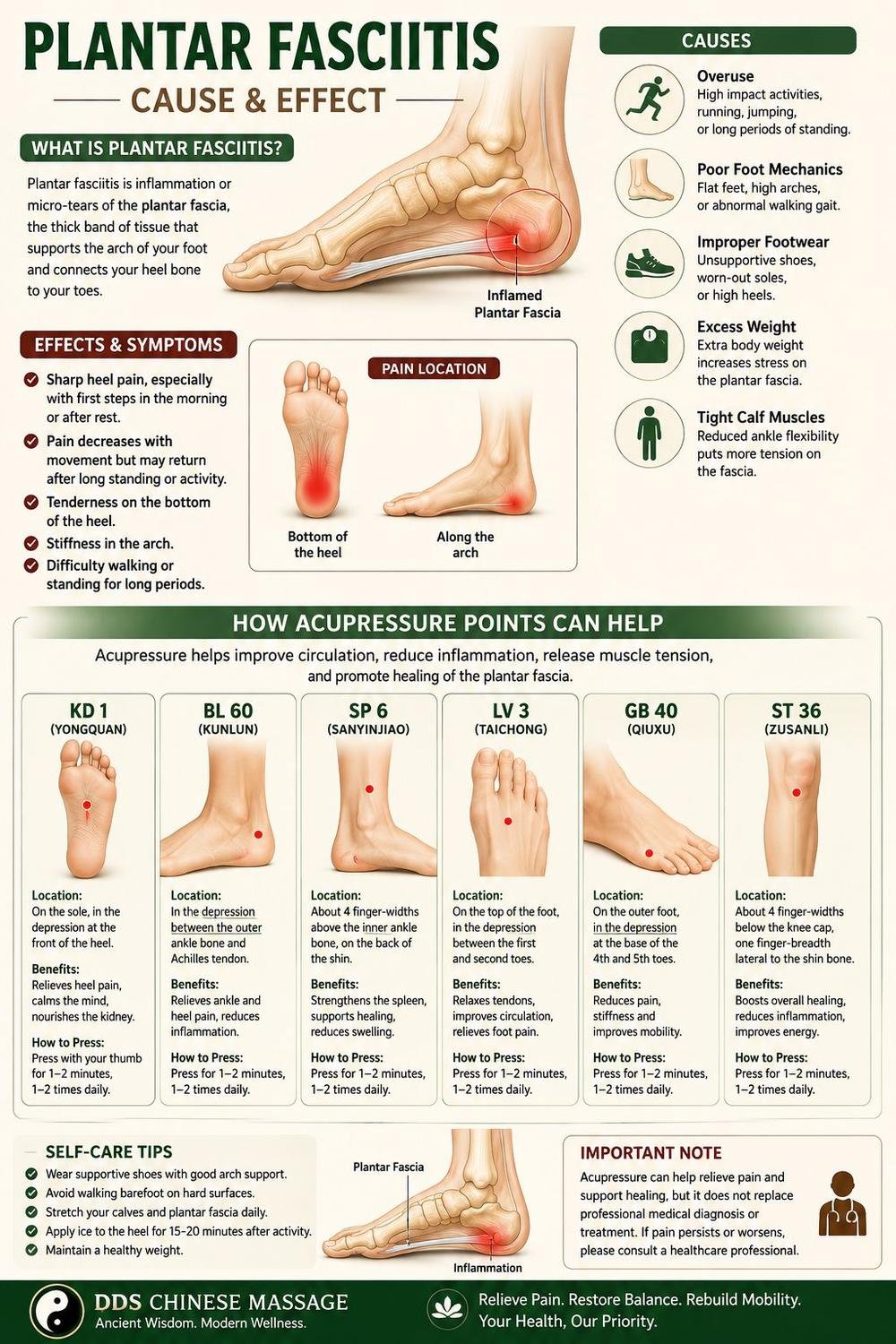
Cause, effect & acupressure points at a glance
Conditions › Lower Limb › Plantar Fasciitis
Lower LimbSharp heel pain with your very first steps in the morning is the classic sign of plantar fasciitis.
The plantar fascia is a thick band of tissue running along the sole of the foot, from the heel to the toes, supporting the arch. Plantar fasciitis involves irritation of this tissue, typically at its attachment to the heel bone, and is one of the most common causes of heel pain.
This thick band supports the arch and can develop small-scale tissue changes with repetitive overload.
The area where the fascia attaches to the heel bone is the most common site of irritation.
Tight calf muscles increase tension through the plantar fascia via the connected Achilles tendon.
Tissue tightens overnight, which is why the first steps after rest are often the most painful.
Both repetitive impact and increased body weight increase strain on the plantar fascia.
Both very flat and very high arches can influence how load is distributed through the fascia.
The sole of the foot and heel are associated with the Kidney and Bladder meridians in Traditional Chinese Medicine, both of which have their origin or pathway through this region. Persistent heel pain is traditionally linked to stagnation or, in some cases, underlying Kidney energy depletion.
DDS Bioelectrical Therapy is often a helpful complement for circulation and recovery in the feet — however, please tell us before your session if you have a pacemaker or any implanted electronic device, metal implants near the treatment area, are pregnant, or have epilepsy, as this therapy is not suitable in these cases.
The fascia tightens overnight, so the first steps stretch it suddenly, causing the classic sharp morning pain.
Many clients find release of the calf and foot muscles helpful, alongside stretching and load management.
Modifying rather than completely stopping activity is usually recommended, alongside addressing contributing factors.
Supportive footwear or orthotics help many people, particularly during the acute phase.
This can be a slower-resolving condition, often taking several weeks to a few months of consistent management.
It may help with calf and foot muscle tightness contributing to the strain on the fascia.
Yes, calf and plantar fascia stretching is a well-supported part of management.
Yes, additional load through the feet is a recognised contributing factor.
Some people find a night splint, which gently stretches the fascia overnight, reduces morning pain.
If pain is severe, doesn't improve after several weeks of appropriate care, or if there's numbness or significant swelling.
Tarsal tunnel syndrome, plantar fasciitis and Achilles tendinopathy can all cause foot and heel discomfort, but each has a distinct pattern. This isn't a substitute for proper assessment, but may help you understand what you're dealing with.
| Condition | Pain Location | Pain Type | Main Cause |
|---|---|---|---|
| Tarsal Tunnel Syndrome | Inside of the ankle, arch, sole, toes | Burning, tingling, numbness, electric shock | Compression of the posterior tibial nerve |
| Plantar Fasciitis | Bottom of the heel, may extend into the arch | Sharp, stabbing pain | Inflammation or degeneration of the plantar fascia |
| Achilles Tendinopathy | Back of the heel, above the heel bone | Aching, stiffness, tenderness | Overuse or degeneration of the Achilles tendon |
Not sure which applies to you? A proper assessment at either clinic can help identify the actual source of your pain.
Regular calf and plantar fascia stretches support recovery.
Supportive shoes with good arch support can reduce strain.
Modify high-impact activity temporarily while symptoms settle.
Gentle stretching before your first steps can ease the sharp morning pain.
Rolling the arch over a cold bottle or ice can help manage discomfort.
This page is general education, not a diagnosis. If anything above applies to you, please see a doctor or visit an emergency department rather than booking a massage.