Conditions › Spine & Nerves › Upper Back Pain
Spine & NervesUpper Back Pain
That nagging ache between your shoulder blades usually has a simple, treatable cause.
Conditions › Spine & Nerves › Upper Back Pain
Spine & NervesThat nagging ache between your shoulder blades usually has a simple, treatable cause.
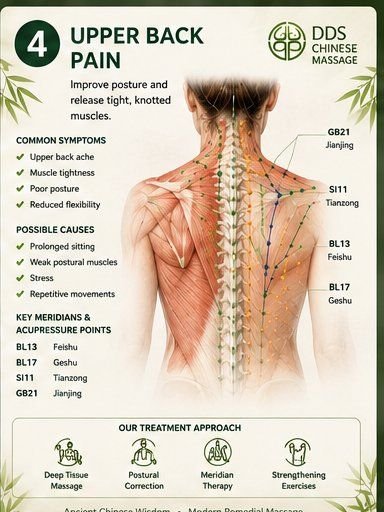
Upper back pain typically involves the thoracic spine and the muscles connecting your shoulder blades to your spine. Unlike the neck and lower back, this region has less natural movement, so pain here is very often related to sustained posture rather than acute injury.
These muscles between the shoulder blades commonly become overstretched and fatigued with forward posture.
Reduced mobility in this part of the spine is closely linked with upper back discomfort.
Restricted fascia across the upper back can add to the sensation of tightness.
Trigger points here are extremely common and often refer pain toward the shoulder blade edge.
Sustained forward head and rounded shoulder posture significantly increases load on this region.
Tension in this area can subtly affect breathing patterns, and vice versa.
Traditional Chinese Medicine associates the upper back with the Bladder meridian, which runs the length of the spine, and views persistent tightness here as a sign of Qi and Blood stagnation, often linked to prolonged poor posture or underlying stress.
Prolonged forward posture stretches and weakens the muscles between the shoulder blades while shortening the chest muscles, creating an imbalance.
Most cases are muscular and respond well to treatment and posture changes, though persistent or severe pain should be checked by a doctor.
Yes, many clients find that improving breathing mechanics helps ease tension in this area.
The upper back has less natural movement and is more postural in nature, while lower back pain often involves more mechanical load.
Stretching helps but usually needs to be paired with strengthening the mid-back muscles for lasting change.
Yes, particularly bags worn on one shoulder consistently over time.
Many clients find cupping particularly effective for the broad, flat muscles of the upper back.
This depends on how long the tightness has built up, but many people notice improvement within a few sessions.
Yes, this is one of the most common areas people unconsciously hold stress-related tension.
Sit back in your chair, bring your screen to eye level, and take a movement break every 30–45 minutes.
Gentle chest-opening stretches counter the effects of forward posture.
Light rowing-type exercises strengthen the mid-back muscles.
Set your screen at eye level and sit back fully in your chair.
Stand and move every 30–45 minutes during long desk sessions.
Deep breathing exercises can help release tension in this region.
This page is general education, not a diagnosis. If anything above applies to you, please see a doctor or visit an emergency department rather than booking a massage.