Conditions › Spine & Nerves › Tension Headache
Spine & NervesTension Headache
That tight, band-like pressure around your head has a name — and a cause you can actually address.
Conditions › Spine & Nerves › Tension Headache
Spine & NervesThat tight, band-like pressure around your head has a name — and a cause you can actually address.
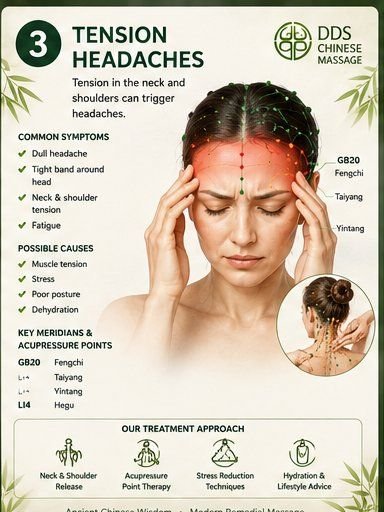
Tension headaches are typically felt as a dull, tight pressure wrapped around the head, often involving the forehead, temples and back of the head. They're closely linked to tightness in the muscles of the scalp, jaw, neck and shoulders, and are frequently triggered by prolonged posture, stress, or eye strain.
Sustained contraction in muscles of the scalp, temple and neck is closely associated with tension-type headache.
Clenching or grinding can involve the temporalis muscle, contributing directly to temple pressure.
Trigger points in the upper trapezius and neck muscles are a common, treatable contributor.
Tightness in the fascia across the scalp can add to the sensation of pressure.
Prolonged muscular tension can increase general sensitivity to pain signals in the head and neck region.
Sustained muscle tension can reduce local blood flow, which may contribute to the dull, aching quality of these headaches.
Traditional Chinese Medicine often links tension-type headaches to stagnation of Liver Qi, frequently associated with stress, alongside tightness in the meridians crossing the head, neck and jaw. Restoring smooth flow through these pathways is a traditional goal of treatment.
Most tension headaches are not dangerous, but frequent or worsening headaches are worth discussing with your doctor.
Many clients find that releasing tightness in the neck, scalp and jaw reduces both frequency and intensity, though individual results vary.
Yes — the jaw muscles are closely linked to the temples and can be a significant contributor for some people.
This depends on how frequent your headaches are; your therapist can suggest a plan after assessment.
Yes, addressing the underlying stress alongside physical treatment often gives the best results.
Frequent daily headaches are worth discussing with your GP to rule out other causes.
Dehydration is a recognised headache trigger for many people, alongside skipped meals and poor sleep.
Yes, though paediatric headaches should always be assessed by a doctor rather than self-managed.
Tension headaches usually feel like pressure without the nausea or visual symptoms that often accompany migraines.
Stretching supports recovery but persistent tension usually benefits from hands-on treatment as well.
Gentle neck and jaw stretches can ease surrounding tightness.
Regular breaks from screens reduce sustained muscular strain.
Regular movement supports circulation and stress regulation.
Consistent sleep timing helps regulate headache frequency for many people.
Steady water intake through the day is a simple, often-overlooked factor.
This page is general education, not a diagnosis. If anything above applies to you, please see a doctor or visit an emergency department rather than booking a massage.