Conditions › Wellness › Stress
WellnessStress
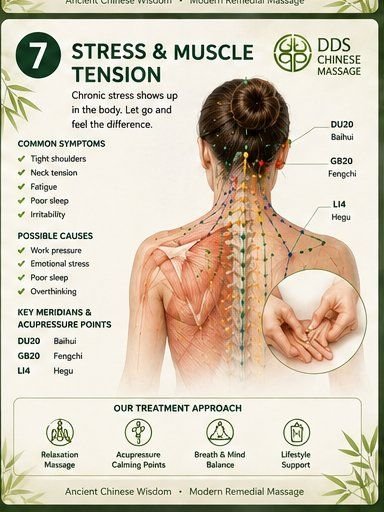
Stress isn't just a feeling — it shows up physically, often as tight shoulders, a clenched jaw, or a racing mind that won't switch off.
Conditions › Wellness › Stress
WellnessStress isn't just a feeling — it shows up physically, often as tight shoulders, a clenched jaw, or a racing mind that won't switch off.
When the body perceives stress, it activates a natural stress response, increasing muscle tension, heart rate and alertness. This response is helpful in short bursts, but when stress is sustained, this physical tension — particularly through the neck, shoulders and jaw — can persist long after the stressful situation has passed.
Stress activates the sympathetic nervous system, increasing baseline muscle tension throughout the body.
The neck, shoulders and jaw are particularly common areas where stress-related tension accumulates.
Stress often leads to shallower, upper-chest breathing, which can itself contribute to neck and shoulder tension.
Sustained stress commonly affects sleep quality, which in turn affects the body's ability to recover from muscular tension.
Relaxation-focused treatment aims to help activate the body's rest-and-recover nervous system response.
Without regular opportunities to reset, stress-related tension tends to accumulate over time.
Traditional Chinese Medicine closely associates stress with the Liver system, considered responsible for the smooth flow of Qi throughout the body. When Qi flow is disrupted by prolonged stress, tension, irritability and physical tightness are traditionally understood to follow.
Many clients find massage helps with both — easing physical tension often supports a broader feeling of relaxation, though massage works alongside your own stress management, not as a replacement for addressing the underlying causes.
This is individual — some people find monthly maintenance helpful, others prefer more frequent sessions during particularly stressful periods.
No, everyone tends to hold stress differently — common areas include the neck, shoulders, jaw and lower back.
Yes, sustained muscle tension from stress is a well-recognised contributor to headaches, neck pain and generalised aching.
Many people find combining massage with breathing or relaxation practices gives more complete results.
Many clients find cupping helpful for easing the broad muscular tension associated with stress.
Yes — see our Self-Care section below for simple things that support ongoing relaxation.
Yes, this is a common cycle — stress affects sleep, and poor sleep reduces the body's ability to recover from tension.
Some people do experience an emotional release during deep relaxation — this is a normal response for some, and your therapist can support you through it.
If stress is significantly affecting your daily functioning, mood, or wellbeing, please speak with your GP or a mental health professional — massage supports physical tension, not a substitute for mental health care.
Physical activity is one of the most reliable ways to support the body's stress response.
Slow, deep breathing can help activate the body's relaxation response.
Protecting sleep time supports the body's overall capacity to manage stress.
Regular, genuine breaks from work and digital connectivity support recovery.
Social support and connection are well-recognised protective factors against the physical effects of stress.
This page is general education, not a diagnosis. If anything above applies to you, please see a doctor or visit an emergency department rather than booking a massage.