Conditions › Wellness › Office Syndrome
WellnessOffice Syndrome
If your body feels worse at the end of a desk-bound day than after a workout, office syndrome might be the reason.
Conditions › Wellness › Office Syndrome
WellnessIf your body feels worse at the end of a desk-bound day than after a workout, office syndrome might be the reason.
Office syndrome isn't a single diagnosis, but a widely used term describing the cluster of musculoskeletal symptoms — neck and shoulder tension, upper back pain, headaches, and wrist discomfort — that commonly develop from prolonged desk-based work. It typically results from a combination of sustained posture, repetitive movement, and insufficient movement variety through the day.
Office syndrome typically involves several regions under strain simultaneously — neck, shoulders, upper back and wrists.
Unlike dynamic activity, sustained static postures don't allow the natural recovery that comes with movement variety.
Typing and mouse use add a repetitive strain component on top of the postural load.
Prolonged sitting reduces circulation throughout the body, which can compound muscular fatigue and tension.
Because multiple regions are affected together, symptoms in one area (like the neck) can worsen or trigger symptoms elsewhere (like headaches).
Chair height, screen position, and keyboard placement all meaningfully influence how much strain accumulates.
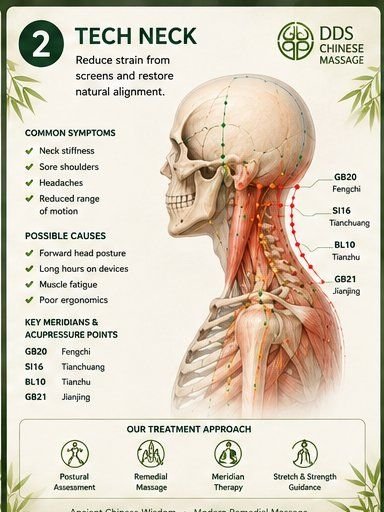
Office syndrome, as a pattern affecting multiple connected regions, is traditionally understood in Chinese Medicine as broader stagnation across several meridians simultaneously, most commonly the Bladder, Gallbladder, Large Intestine and San Jiao channels which cross the neck, shoulders, back and arms.
It's a widely used descriptive term for a common cluster of desk-work-related symptoms, rather than a single formal diagnosis — but the symptoms themselves are very real and treatable.
Yes, many clients find regular massage helpful for managing the combined muscular tension across the neck, shoulders and back.
Regular movement breaks — even brief ones every 30–45 minutes — tend to make a meaningful difference for most people.
A well-adjusted basic setup (screen at eye level, supportive chair, keyboard at elbow height) matters more than expensive equipment.
Yes, the combined neck and shoulder tension commonly contributes to tension-type and cervicogenic headaches.
This varies by individual, but many desk workers find regular sessions (monthly or more frequent) helpful for ongoing management.
Yes, brief regular stretching and position changes throughout the day meaningfully reduce accumulated tension.
It may help address specific trigger points contributing to the pattern of tension.
Many people find alternating between sitting and standing helps, though standing all day can create its own strain — variety tends to matter most.
If symptoms are severe, involve numbness or weakness, or don't improve with ergonomic changes and treatment.
Stand and move every 30–45 minutes throughout the workday.
Set your screen at eye level and keep your keyboard at elbow height.
Simple neck, shoulder and wrist stretches through the day help prevent accumulation of tension.
Ensure your chair properly supports your lower back.
Alternate between sitting, standing, and walking meetings where possible.
This page is general education, not a diagnosis. If anything above applies to you, please see a doctor or visit an emergency department rather than booking a massage.