Conditions › Spine & Nerves › Lower Back Pain
Spine & NervesLower Back Pain
Lower back pain is one of the most common reasons people seek treatment — and one of the most misunderstood.
Conditions › Spine & Nerves › Lower Back Pain
Spine & NervesLower back pain is one of the most common reasons people seek treatment — and one of the most misunderstood.
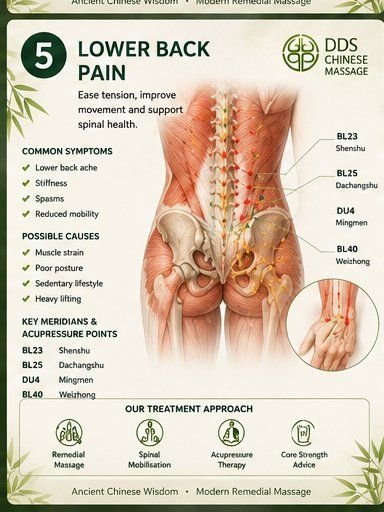
Lower back pain can come from the muscles, the discs between vertebrae, the small facet joints, or the sacroiliac joints connecting the spine to the pelvis. Most cases are related to muscular strain or joint restriction rather than serious structural damage, and the large majority improve with appropriate conservative care.
These muscles stabilise the lower spine and are commonly involved in muscular low back pain.
These act as shock absorbers between vertebrae and can be a source of pain when irritated, though disc changes are also common in people without any pain.
Small joints at the back of each vertebra can become a localised source of stiffness and pain.
These joints connecting the spine to the pelvis are a common, sometimes overlooked source of lower back pain.
Weakness in the deep core muscles is associated with a higher likelihood of recurring back pain.
With persistent pain, the nervous system can become more sensitive over time, which is part of why early, appropriate care matters.
Traditional Chinese Medicine closely associates the lower back with the Kidney system, considered a foundational source of vital energy, alongside the Bladder meridian which runs directly through this region. Persistent lower back weakness or pain is traditionally linked to depleted Kidney energy or stagnation along these pathways.
The large majority of lower back pain is muscular or joint-related and improves with conservative care — but persistent, severe, or unusual pain should always be assessed by a doctor.
Current evidence generally favours staying as active as comfortably possible rather than complete bed rest, though this depends on your specific situation.
It can be, but disc changes are also extremely common in people with no pain at all — imaging findings don't always match symptoms.
Sciatica specifically involves nerve pain traveling down the leg — see our dedicated Sciatica page for more detail.
Yes, core stability plays an important supportive role for the lower spine, and strengthening it is often part of a treatment plan.
Massage can significantly help manage symptoms, but persistent cases often benefit from a combined approach including exercise and posture changes.
This varies widely; your therapist will discuss an appropriate plan after your assessment.
Yes, stress commonly leads to unconscious muscle guarding in the lower back and hips.
Often yes, with gentler technique — communicate clearly with your therapist about your pain level.
If your pain is new, severe, or associated with any red flag symptoms below, please see your doctor first.
Gentle walking is one of the most reliably helpful things for most lower back pain.
Gentle knee-to-chest and cat-cow stretches can ease stiffness.
Gradual core strengthening supports long-term spinal stability.
A supportive mattress and pillow between the knees (side sleeping) can reduce strain.
Avoid prolonged sitting without breaks; stand and move regularly.
This page is general education, not a diagnosis. If anything above applies to you, please see a doctor or visit an emergency department rather than booking a massage.